Note: This post may contain affiliate links.
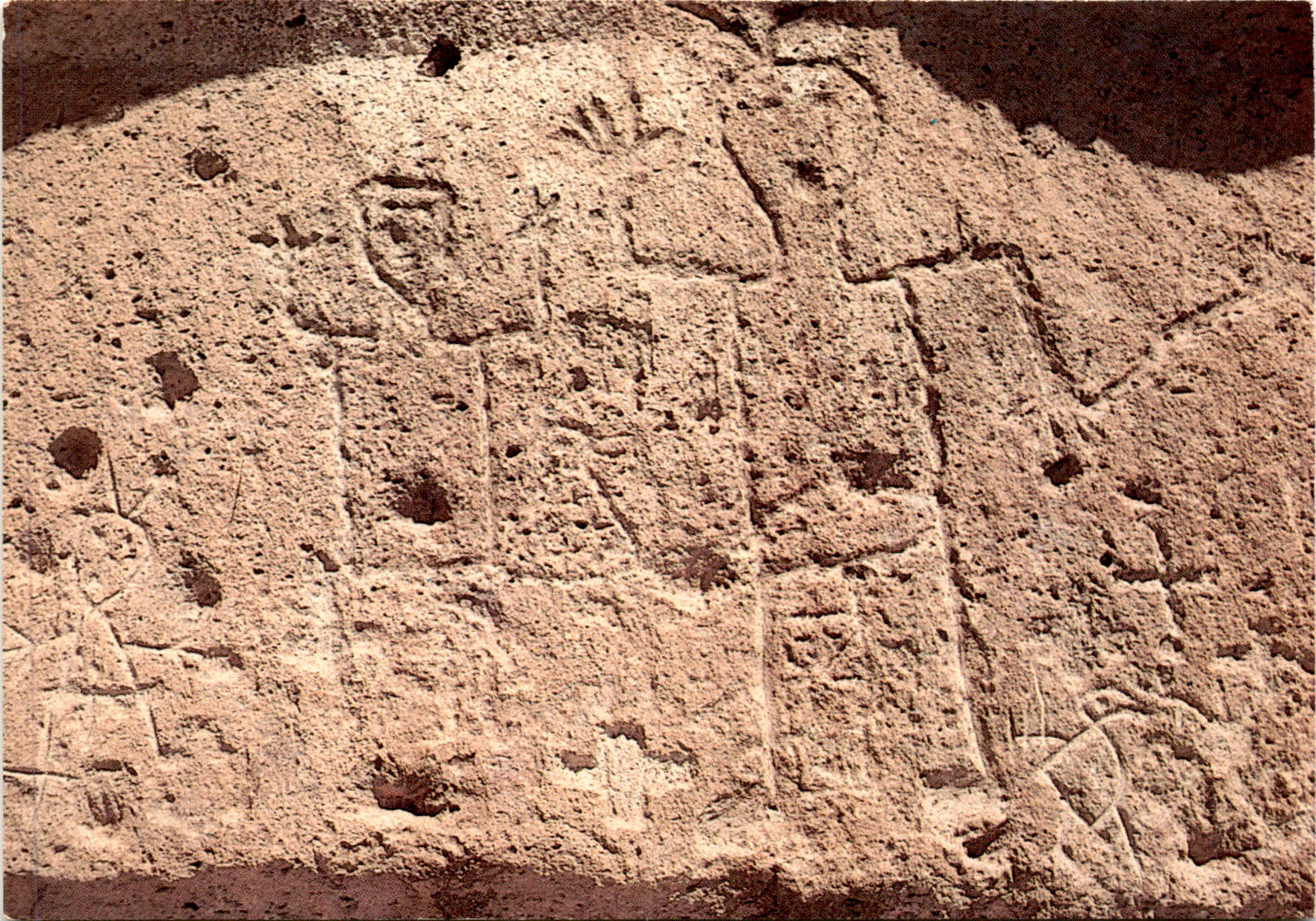
 The postcard features Petroglyphs at Bandelier National Monument in Frijoles Canyon, New Mexico. These symbols and figures were cut into the rocks by prehistoric Indians, with the menacing figures at Tsankawi ruins believed to have been meant to frighten away intruders.
Bandelier National Monument is a 33,677-acre park in New Mexico that preserves the homes and territory of the Ancestral Puebloans. The park features ancient cliff dwellings, petroglyphs, and cave paintings that provide insight into the lives of the people who lived in the area over 11,000 years ago.
Petroglyphs are rock carvings made by pecking directly on the rock surface using a stone chisel and a hammerstone. These carvings can depict a variety of subjects, including animals, people, and symbols, and are found in many different cultures around the world.
The Tsankawi ruins at Bandelier National Monument are a series of ancient Puebloan dwellings and petroglyphs located on a mesa top. The menacing figures carved into the rocks are believed to have been a form of protection or warning to deter unwanted visitors from entering the area.
Overall, Bandelier National Monument is a fascinating archaeological site that offers a glimpse into the rich history and culture of the Ancestral Puebloans who once inhabited the region. The petroglyphs and ruins found at the park provide valuable insights into the daily lives, beliefs, and practices of these ancient peoples.