Note: This post may contain affiliate links.
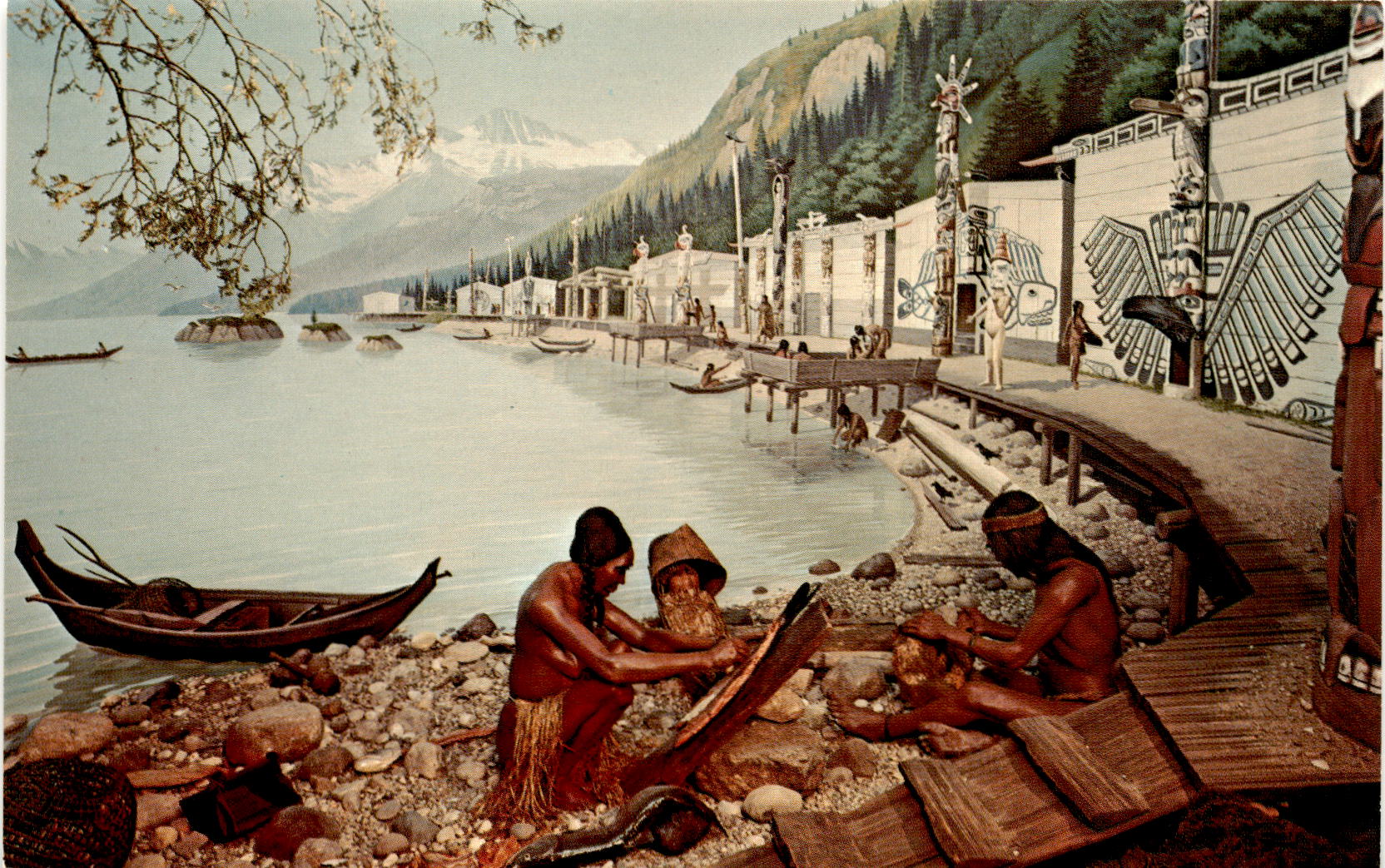
 The postcard features a Kwakiutl Village in British Columbia, highlighting the culture of the Kwakiutl Indians who belong to the “Salmon and Cedar” culture of the Northwest Coast of North America. They are known for living in cedar-plank houses and for their carved masks and totem poles. The postcard was produced exclusively for the Milwaukee Public Museum in Milwaukee, Wisconsin.
The Kwakiutl people, also known as the Kwakwaka’wakw, are Indigenous peoples of the Pacific Northwest Coast. They traditionally inhabited the northern part of Vancouver Island and the adjacent mainland of British Columbia, Canada. The Kwakiutl are known for their rich cultural heritage, including their intricate art forms such as woodcarving, weaving, and ceremonial masks.
Cedar-plank houses, also known as longhouses, are traditional dwellings of the Kwakiutl people. These houses are made from cedar planks and are often decorated with intricate carvings and paintings. They serve as communal living spaces for extended families and are central to Kwakiutl social and cultural life.
Carved masks and totem poles are iconic art forms of the Kwakiutl people. Masks are used in ceremonial dances and rituals to represent spirits, animals, and ancestors. Totem poles, on the other hand, are monumental sculptures that depict family crests, legends, and histories. These art forms are not only visually striking but also hold deep spiritual and cultural significance for the Kwakiutl people.
The Milwaukee Public Museum is a renowned institution that showcases cultural and natural history exhibits from around the world. By featuring the Kwakiutl Village in British Columbia, the museum provides visitors with a glimpse into the rich and diverse heritage of Indigenous peoples in North America. The postcard serves as a reminder of the importance of preserving and celebrating Indigenous cultures and traditions.